
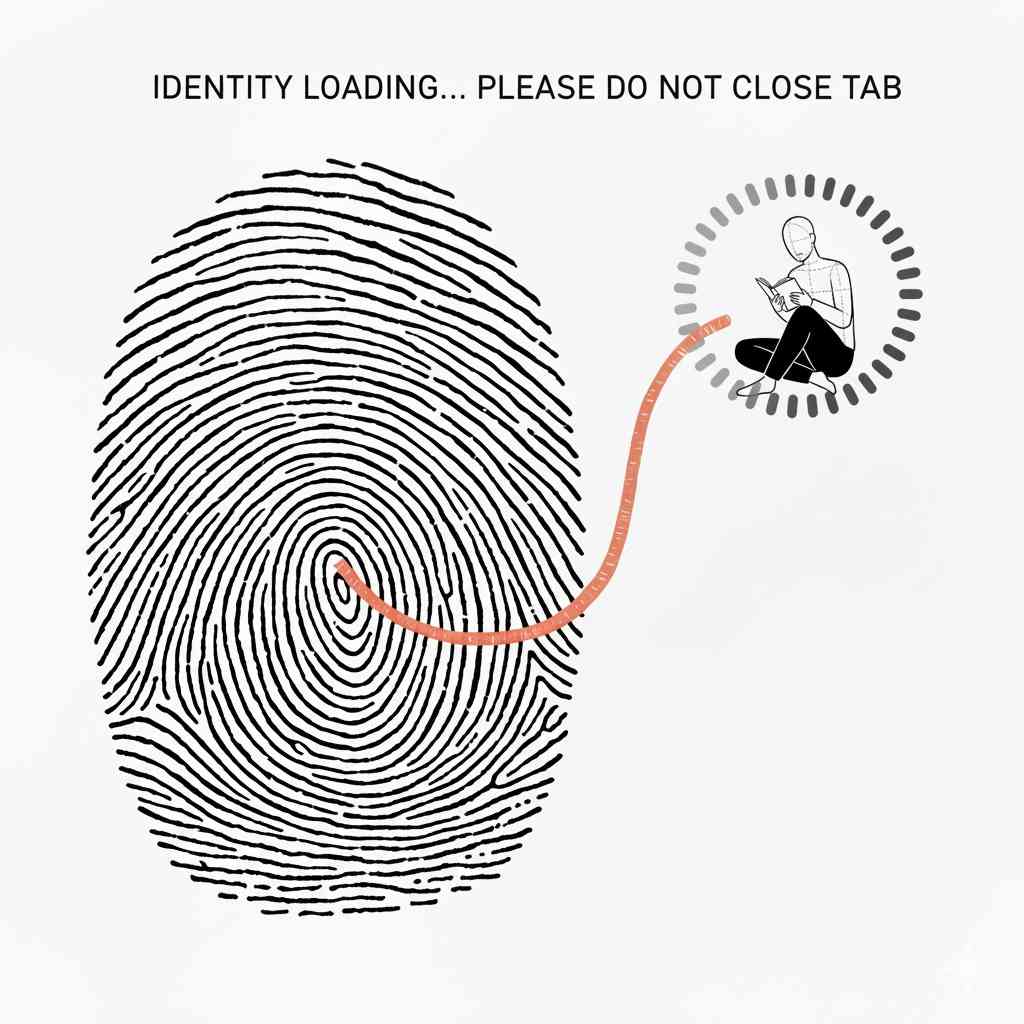
There's a moment in every creative project when you can sense whether someone was truly present during its creation. Not just mechanically involved, like moving the cursor, clicking keys, or saving files, but fully awake and engaged in the work itself.
It's the difference between work that breathes and work that just exists. Between something made and something built. Between a template executed and a problem solved.
I call it proof of life.
The difference between a file and a pulse.
The Autopilot Problem
We've all been there. You're moving fast, deadline looming, and you reach for the familiar solution. The template you've used before. The framework that "just works." The safe choice that won't raise questions.
And there's nothing inherently wrong with efficiency. The problem starts when efficiency becomes the only thing. When speed replaces intention. When we're so focused on shipping that we forget to show up.
Because here's what happens: the work gets done, but nobody, not even you, can tell who did it. It could have been anyone. It might as well have been automated. It carries no signature, no perspective, no pulse.
It's work without fingerprints.

Efficiency is cheap. Identity is expensive.
What Fingerprints Look Like
Proof of life isn't about ego or unnecessary flourishes. It's about evidence of thinking. The small decisions that reveal someone actually considered the problem, weighed the options, and made a choice.
Excellence doesn't rush. It marinates.
In design, it's: The extra hour spent getting the typography hierarchy right. The decision to break from the grid because the content demanded it.
In strategy, it's: The framework that's shaped to this company's reality, not borrowed wholesale. The plan that acknowledges what won't work as clearly as what will.
In code, it's: The comment that explains why, not just what. The variable name that's descriptive because you thought about the human who'll read it.
These aren't big gestures. They're small acts of presence. Evidence that someone was thinking, not just executing.
The Cost of Absence
When we automate ourselves out of the work, when we're simply moving pieces around instead of truly solving problems, we pay a price that goes beyond quality. We lose the connection between effort and outcome. We stop learning. We begin to question whether what we do actually matters.

Code can run without you. It cannot care without you.
Staying Awake
So how do you fight autopilot? How do you stay present in your work when everything's optimized for speed?
Start with the constraint. The limitation is often where your fingerprint emerges. When you can't use the template, can't follow the playbook, and can't lean on what worked before, you're forced to actually think.
Ask one more question. Before you reach for the familiar solution, pause. Is this actually the right answer for this situation? Or is it just the fastest one? What would change if you had one more day?
Leave a trail. Document your thinking. Write the comment. Explain the choice. Not because someone asked, but because you were there when the decision was made, and that presence deserves to be recorded.
"The question isn't whether you can work faster. It's whether anyone can tell you were there at all."
So leave your fingerprints. Make work that couldn't have come from anyone else. Show up not just to execute, but to think.
Stay awake in what you build.
Because that's the only proof that matters.