
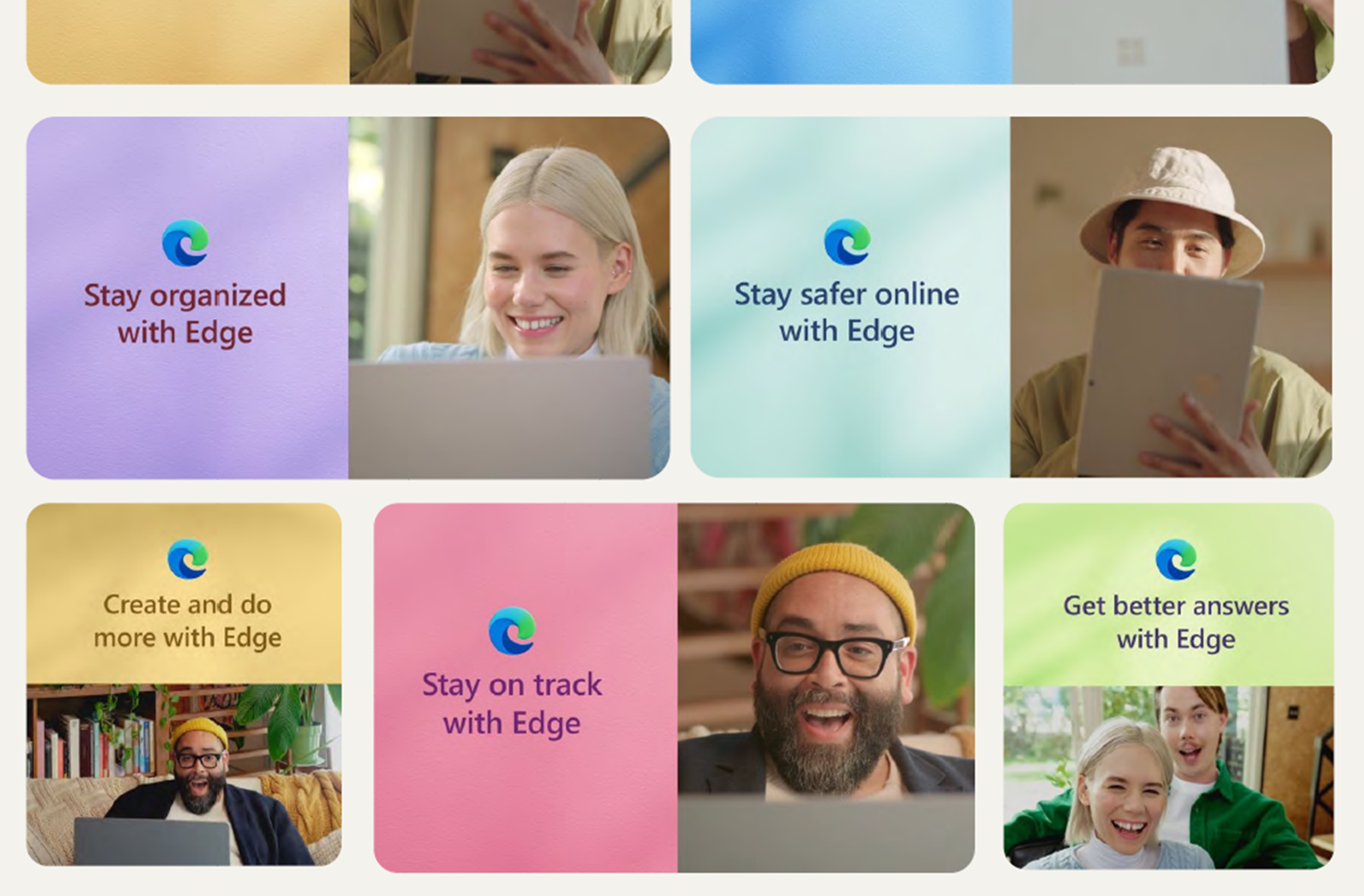
Browser marketing is usually boring. We wanted to change that.
Most tech companies treat support content as an afterthought. It lives in dusty FAQs or dry help articles. But we noticed a pattern: people weren't reading the help docs. They were searching YouTube for answers and finding nothing.
We saw an opportunity to turn "Support" into "Discovery." But we didn't want to make tutorials. Tutorials are about clicking buttons. We wanted to make Lifestyle Proof-of-Concepts.
The Insight
If they are asking how to do it, they want to use it. Confusion isn't a barrier; it's a signal of intent.
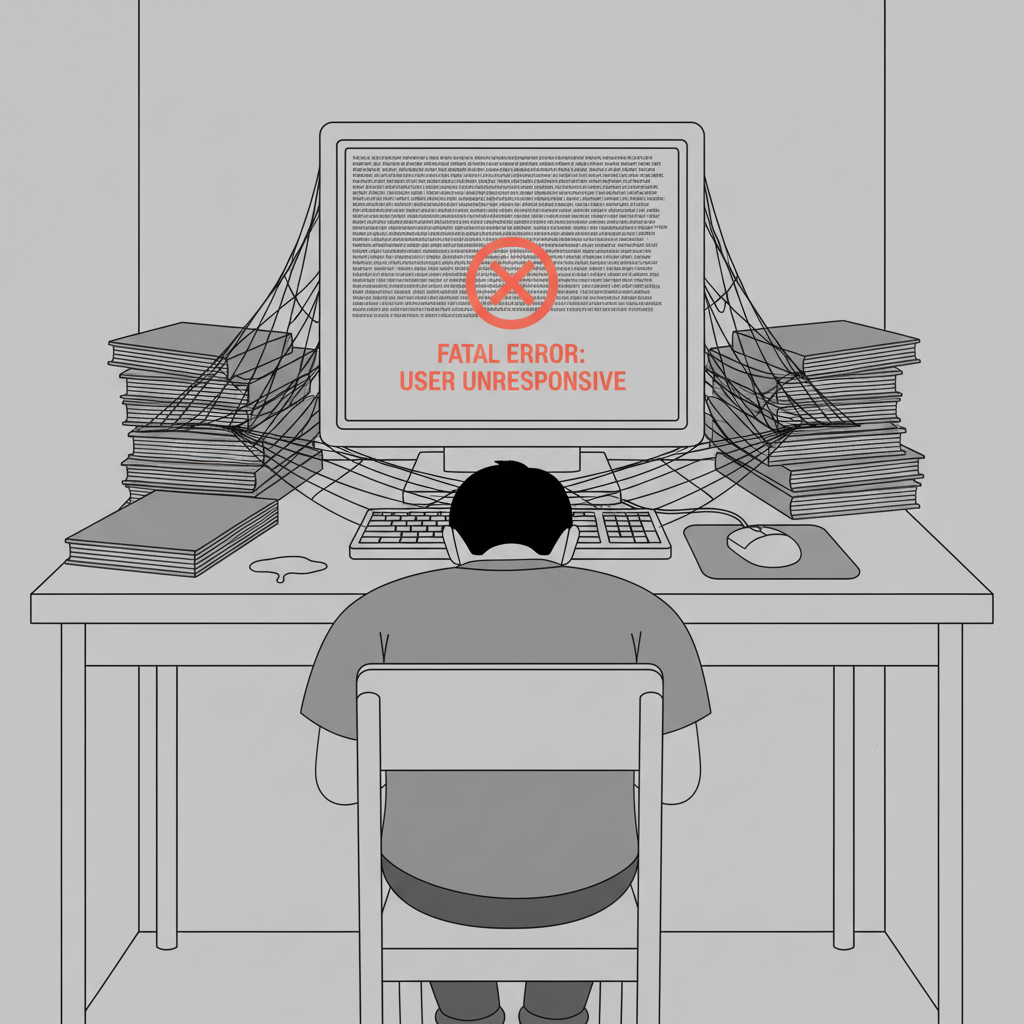
The old way: Dense documentation for a visual problem.
The Narrative Formula
Each video followed a tight, 30-40 second structure designed to respect the user's intelligence.
1. The Hook: A relatable scenario ("How to party with Edge"). Not a feature name.
2. Context Setup: A human host introduces a real-world goal. "I need to plan a birthday."
3. Feature Demo: A rapid-fire walkthrough. We didn't show the mouse moving across the screen; we showed the *result* of the action.
The Human Bookend
The host appears at the start and finish, never in the middle. The face builds trust; the UI builds competence.
Visual Style: Deconstructed UI
This wasn't screen recording. It was UI as Hero Object. We "lifted" the Edge browser out of the OS and placed it in a stylized 3D environment.
We removed the messiness of real browsing, including the ads, the 50 open tabs, and the toolbar clutter, to isolate exactly what the viewer needed to learn. It wasn't deceptive; it was aspirational. It showed the software as it feels when you're in flow.
The Money Shot
Every script built toward a critical payoff: the transition from Digital to Physical.
The screen would dissolve into the real-world outcome: the balloons at the party, the packed suitcase, the finished meal. This was the proof. The software didn't just help you browse; it helped you do.
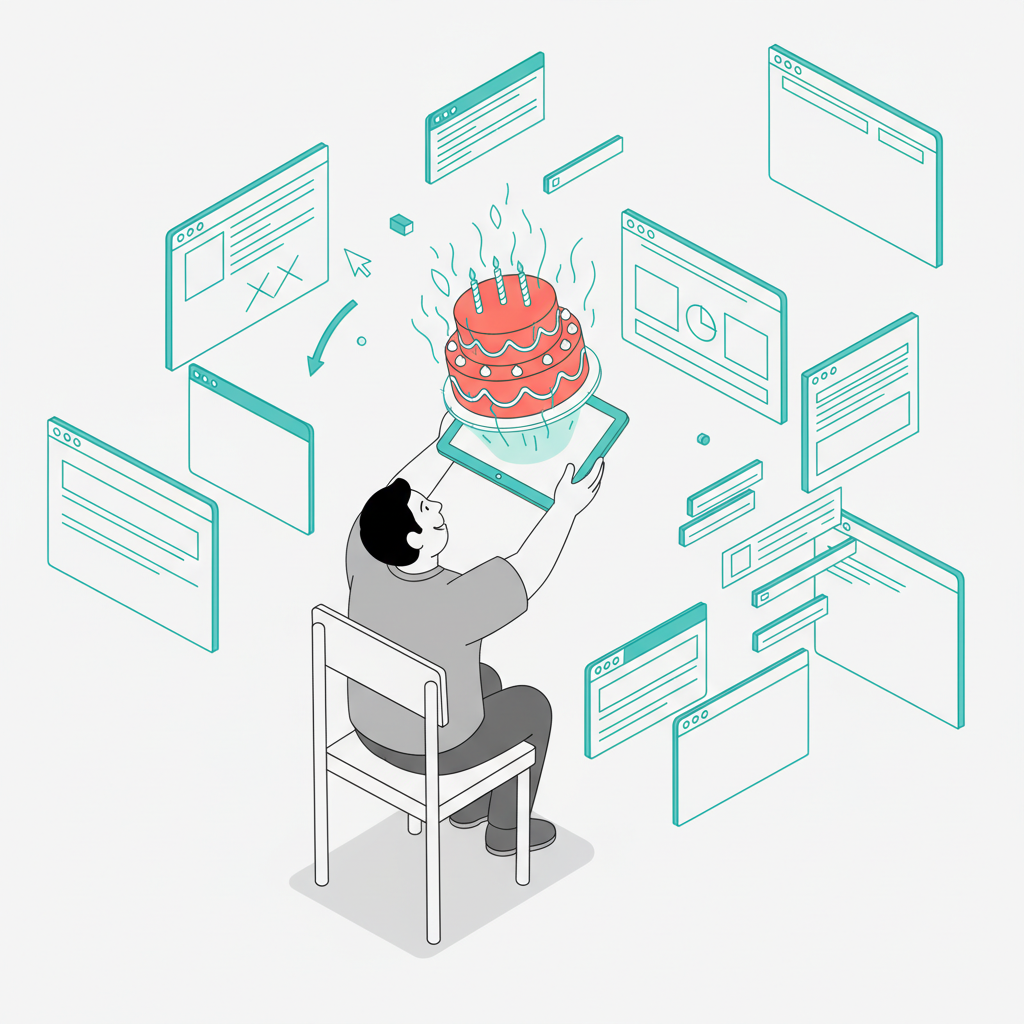
The new way: Deconstructed UI delivering a real-world outcome.
We don't teach features. We show outcomes.
What started as a pilot of 7 videos became a scalable system. Because the format was modular, those 7 assets were remixed into hundreds of social cuts, ads, and localized versions without a single reshoot.
That's the power of building a system, not just a video.